
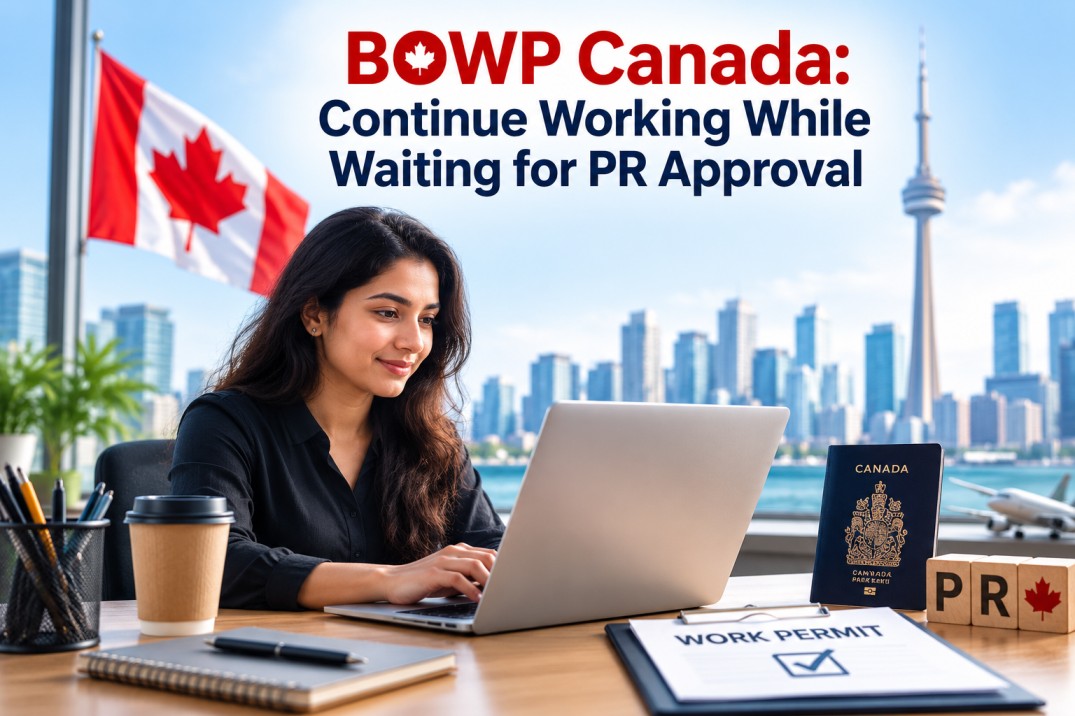
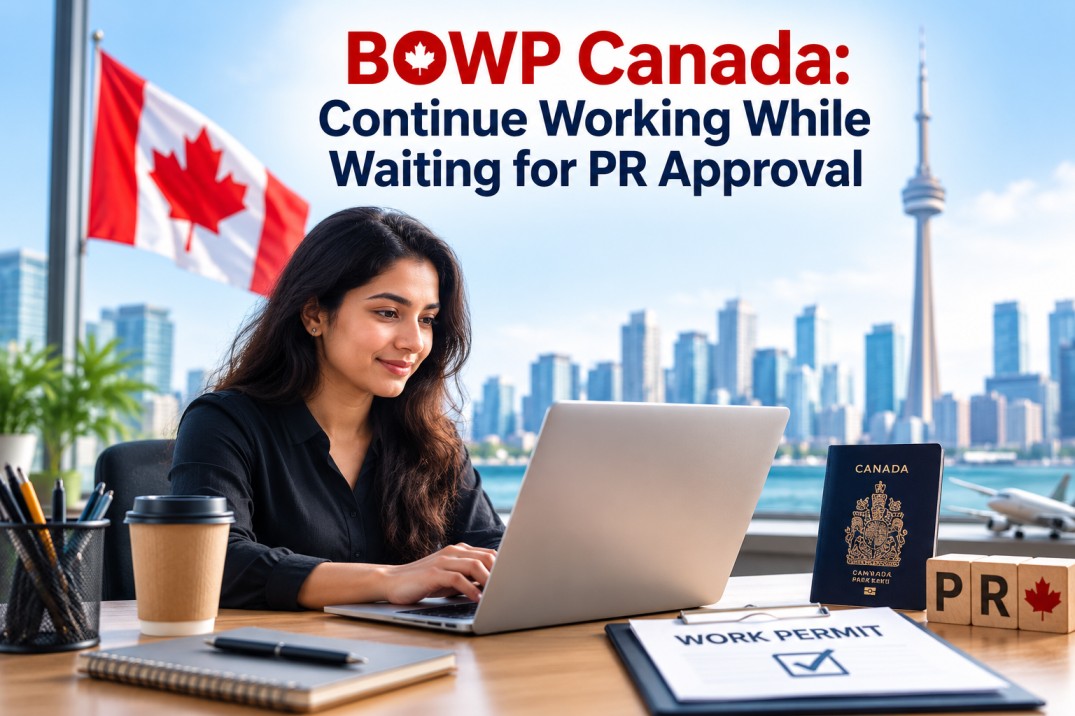
A Bridging Open Work Permit (BOWP) is a temporary work permit that allows the eligible permanent residence applicants to remain legally employed in Canada while their permanent residence application is getting processed. It bridges the gap between the expiry of work permit and the final decision regarding the PR application. A BOWP is an open work permit and generally allows the holder to work for most employers in Canada without requiring a new Labour Market Impact Assessment (LMIA). It helps to avoid employment interruptions and also to obtain a steady income while waiting for PR approval. Applicants have to meet specific Bridging Open Work Permit requirements and apply for BOWP before their current work permit expires to continue to work while awaiting a PR application decision.
To qualify for a Bridging Open Work Permit an applicant must generally meet the following requirements:
Express Entry applicants: Their electronic Application for Permanent Residence (APR) must have successfully passed the completeness check required under Section 10 of the Immigration and Refugee Protection Regulations (IRPR).
Quebec Skilled Worker Program applicants: Their permanent residence application must have passed the federal completeness check under section 10 of the IRPR.
Applicants under certain non-Express Entry programs: Those applying through the Caring for Children Class, Caring for People with High Medical Needs Class, the Agri-Food Pilot, or a non-Express Entry Provincial Nominee Program (PNP) stream must have received a positive eligibility assessment for their permanent residence application submitted either online or by mail.
Applicants may qualify for a Bridging Open Work Permit Canada if they have submitted a permanent residence application under one of the eligible immigration programs and meet all other eligibility requirements:
Your spouse or common-law partner may qualify for an open work permit if the principal applicant meets IRCC requirements which are:
Dependent children: They are not generally eligible for an open work permit through the BOWP program. If they want to work in Canada they must qualify under their own immigration category or work permit provisions.
Provincial Nominee Program (PNP) Applicants
Applicants who are nominated under a Provincial Nominee Program may have employment location restrictions on their Bridging Open Work Permit Canada. The employment location on the work permit must correspond to the nominating province or territory, and the applicant must work within that designated location. When applying, the applicant must select the nominating province as the province of destination and choose the corresponding city of destination option to accurately reflect the approved employment location.
Quebec Skilled Worker Applicants
Applicants applying for permanent residence through the Quebec Skilled Worker Program may qualify for a BOWP. When completing the work permit application, they must select Quebec as the employment location.
With a Bridging Open Work Permit (BOWP), eligible foreign nationals who have submitted their PR application and are waiting for a decision can continue to work in Canada while their application is being processed. Applying for a BOWP properly is very important. The applicant has to meet the Bridging Open Work Permit requirements, select the correct application type, ensure accuracy in documentation and must meet the IRCC regulations.
ImmiLaw Immigration will guide in your BOWP application process. Our professional team will assess your eligibility and review the documents, and we will check that your application is complete, accurate, and is prepared in compliance with current immigration requirements.
Read to know: Canada PR Without IELTS: Is It Possible in 2026?







 (2)68c2c24f359ca.jpg)


 CANADA
  +1 (647) 767-0672